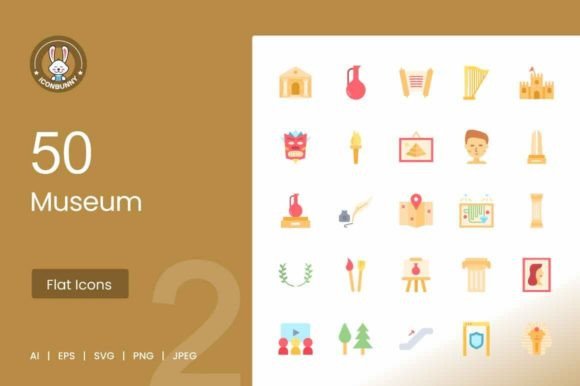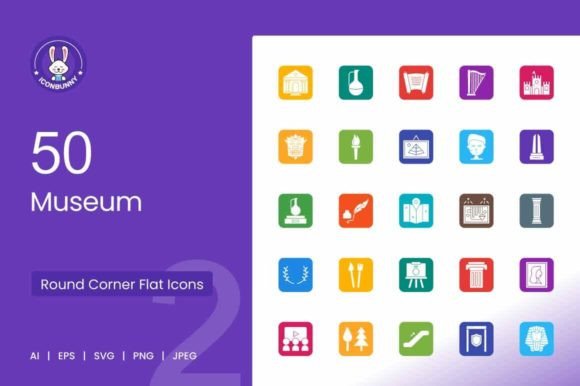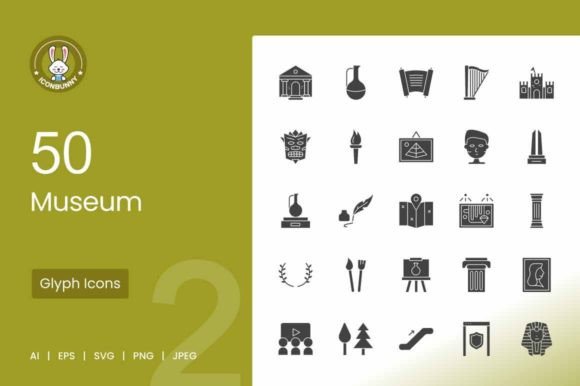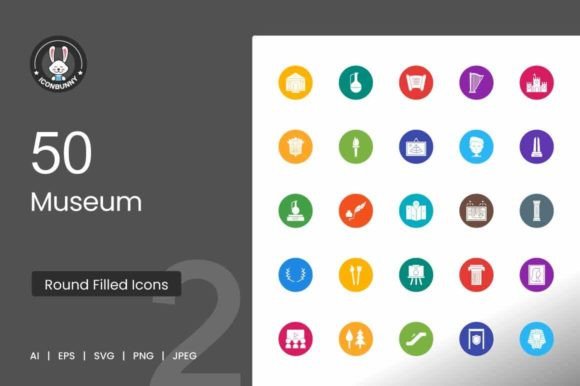
50 Museum Flat Round Icons Review
When I first opened the folder for 50 Museum Flat Round Icons, I didn't just see a collection of graphics; I saw potential inventory for my next craft fair booth. As someone who spends hours tweaking stitch density and selecting thread colors, my initial reaction is always practical: "Will this hold up under the needle?" The flat, museum-style aesthetic immediately suggests a curated, sophisticated vibe that feels far removed from the chaotic, colorful cartoons often found in generic design bundles. These icons possess a quiet confidence, perfect for clients who want their brand or personal gift to look established rather than trendy.
The First Stitch Test: Visual Personality
The defining characteristic of 50 Museum Flat Round Icons is the round shape combined with a minimalist interior. This isn't just about the geometry; it's about how the eye travels across the design. In embroidery, negative space is your friend, and these icons respect that rule. The flat style translates beautifully to satin stitch because there are no complex gradients to mimic with thread. Instead, the design relies on clean lines and bold shapes, which means fewer threads breaking and a much smoother finish on the fabric.
I imagine placing one of these designs on a heavy cotton tote bag for a local art gallery opening. The round frame acts as a natural border, containing the visual information perfectly. Unlike jagged edges that can fray or look messy on woven fabrics, the circle offers a forgiving boundary that looks intentional even if the stitching isn't pixel-perfect. For a handmade shop owner, this level of polish is crucial. It signals to the buyer that the product was created with care, elevating the perceived value of a simple $25 tote bag into a premium accessory.
Real-World Application: From Digital File to Finished Product
Let's talk about a specific scenario I recently considered: creating a line of personalized baby gifts. Parents love nursery decor that is subtle yet meaningful. Using 50 Museum Flat Round Icons, I could create a set of embroidered patches featuring symbols like a pacifier, a bottle, or a teddy bear, all enclosed in those neat circular frames. The flat design ensures that the details remain visible even when stitched onto soft, stretchy knits used for onesies or burp cloths.
However, moving from a digital preview to a physical garment requires strategic planning. If you are an Etsy seller looking to expand into custom apparel, these icons work exceptionally well for sweatshirt embroidery. A single icon placed over the heart area of a crewneck sweatshirt creates a focal point without overwhelming the wearer. The simplicity allows the texture of the fleece or cotton blend to show through slightly, adding depth to the final piece. When customers receive a package containing a custom embroidered item, they are reacting to the tactile quality of the thread against the fabric. A clean, flat design minimizes the risk of puckering, ensuring the garment remains comfortable to wear.
These graphics also shine in the realm of kitchen textiles. Imagine a set of tea towels featuring icons representing different herbs or cooking tools. The round shape fits neatly on the corner of a towel or centered on a napkin. Because the design is flat, it stands out clearly against busy patterns or solid colors alike. This versatility makes 50 Museum Flat Round Icons a valuable asset for anyone selling boutique home goods or holiday gifts. During the holidays, a simple round icon of a bell or a star can be quickly adapted for seasonal merchandise without needing a complete redesign.
Where Caution Is Required
While the design is versatile, no single file works perfectly for every situation. There are specific constraints where 50 Museum Flat Round Icons might struggle if not handled correctly. One major consideration is the hoop size. If you attempt to stitch these icons on a very small hoop, such as one designed for a hat brim or a delicate wrist cuff, the round border might become too compressed. The curvature of the fabric can distort the circle, making it look more like an oval unless the stabilizer is perfectly chosen.
Textured fabrics present another challenge. If you are embroidering on a chunky wool sweater or a rough burlap sack, the fine details inside the flat icon might get lost in the weave. In these cases, the contrast between the thread and the fabric becomes critical. On dark fabrics, you will need high-contrast thread colors to ensure the white or light-colored spaces within the icon remain visible. Conversely, on light fabrics, a dark outline is essential to define the shape. Without proper color selection, the "flat" look can turn muddy and indistinct.
Furthermore, while these icons are great for general use, they may not be suitable for products that require extreme durability, such as workwear or items subjected to frequent industrial washing. Dense stitch areas around the perimeter of the circle can sometimes cause the fabric to pull inward if the underlying material is thin or stretchy. Always test the design on scrap fabric before committing to a final product. This step is non-negotiable for professional results.
Practical Notes for the Embroidery Designer
Before you hit the start button on your machine, there are several technical checks you must perform. First, review the stitch density. Even though the description mentions these are ready-to-use files, the default settings might not match your specific machine or thread type. Check whether the fill stitch covers the area evenly or if it leaves gaps that need to be filled manually.
Stabilizer choice is equally important. For a project involving a tote bag or a pillow cover, a cut-away stabilizer is usually best to prevent the design from shifting or distorting over time. However, for a cap or a curved surface, a tear-away might be necessary to maintain the shape of the hat. You must also inspect the small details within the icons. Sometimes, tiny elements in a digital graphic can translate to invisible specks in embroidery if the thread count is too low. Run a black and white mockup to verify that the contrast holds up before spending hours on a production run.
If you are selling finished products, confirm the licensing terms associated with 50 Museum Flat Round Icons. Many designers assume that buying a digital file grants unlimited commercial rights, but this is not always the case. Ensure you have the legal right to sell items made with these designs, especially if you plan to list them on platforms like Etsy or at craft fairs. Additionally, consider how the design will appear in both color and monochrome. A design that looks vibrant in RGB might lose its impact in thread form if the colors are too similar in value.
Final Thoughts on Value and Versatility
In conclusion, 50 Museum Flat Round Icons offers a refined solution for designers looking to add a touch of elegance to their embroidery projects. The flat style provides a modern aesthetic that appeals to a wide audience, from tech-savvy millennials to traditional craft lovers. Whether you are creating a custom apron for a chef, a patch for a denim jacket, or a digital asset for a client's branding kit, these icons provide a solid foundation.
The key to success lies in respecting the medium. Embroidery is a tactile art form that demands attention to detail regarding thread tension, fabric grain, and stabilizer support. By treating these graphics as a starting point rather than a finished product, you can leverage their clean lines and versatile shapes to create high-quality, marketable items. For the creative entrepreneur, the ability to produce consistent, professional-looking goods is what builds trust and drives sales. With careful execution, 50 Museum Flat Round Icons can become a staple in your design arsenal, helping you turn simple threads into memorable, tangible experiences for your customers.