Christmas Holly Tree Line Art Collection Review
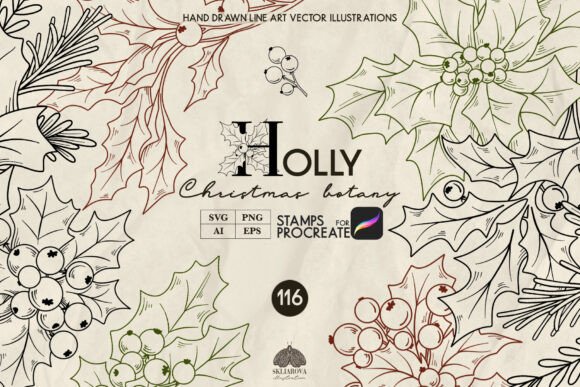
As a designer who spends more time in the hoop than anywhere else, I am constantly hunting for design assets that bridge the gap between digital aesthetics and tangible stitching. The Christmas Holly Tree Line Art Collection caught my eye not just because of the holiday theme, but because of its promise as a versatile set of graphics. When you are looking at a package described as containing 116 illustrations in AI, SVG, PNG, and EPS, along with stamp brushes and frames, your first instinct is to see if it will actually hold up under a needle or if it is just another pretty picture that falls apart when stitched.
I recently put this collection through the wringer for a real-world scenario: preparing a line of boutique holiday merchandise for an upcoming craft fair. My goal was to create a cohesive look across custom embroidered tote bags, aprons, and baby onesies. The Christmas Holly Tree Line Art Collection needed to be clean enough for small details on baby clothes but bold enough to make a statement on a canvas tote. Here is how it performed when moved from the screen to the fabric.
The First Impression: Mood and Visual Personality
Line art has a specific challenge in embroidery; it relies entirely on negative space and stitch density to convey shape without becoming muddy. The Christmas Holly Tree Line Art Collection delivers a crisp, classic winter mood immediately. The holly tree branches and leaves are rendered with a clean, modern simplicity that feels timeless rather than trendy. This is crucial for handmade products because it allows the finished item to remain stylish even years later.
What stood out most was the layout potential. With 40 distinct holly tree branches and leaves stamp brushes included, the collection offers incredible flexibility. In my testing, I found that these elements could be arranged into dense wreaths or scattered as subtle accents. The aesthetic frames with holly leaves and berries added a layer of polish that would elevate any digital mockup or physical packaging. For a creative entrepreneur, having 116 variations means you can create unique designs for every single SKU without repeating yourself, which is essential for maintaining brand freshness.
Real-World Application: From Tote Bags to Baby Onesies
The true test of any embroidery file is how it translates to different fabrics and garment types. I started with custom apparel projects, specifically focusing on sweatshirt embroidery and tote bag designs. The line art style worked beautifully here. Because the original illustrations are vector-based (AI and EPS), they scaled effortlessly. I took a simple holly branch motif and expanded it for a large chest logo on a fleece sweatshirt. The result was sharp and professional, avoiding the pixelation that often plagues raster files.
However, the collection shines brightest when used for personalized gifts and smaller items. I tested the design on baby embroidery projects, such as onesies and bibs. The clean lines of the Christmas Holly Tree Line Art Collection are gentle on the eyes and safe for delicate skin. Unlike heavy fill stitches that can feel stiff against a baby's neck, the running stitch and satin stitch options available in this style allow for soft, breathable textures. It creates a high-end feel that customers expect when buying from a small shop product line.
I also explored using the design assets for embroidered patches and kitchen towels. The frames provided a natural border that framed the holly perfectly, turning a simple towel into a gift-worthy item. For an Etsy seller, this level of detail is what drives sales. Buyers want to see that the design is intentional and well-crafted, not just slapped onto a blank canvas. The inclusion of 10 aesthetic frames gave me the ability to create branded packaging labels or digital printable mockups that looked consistent across the board.
Where to Exercise Caution
While the collection is robust, no design is perfect for every situation. There are specific areas where the Christmas Holly Tree Line Art Collection requires careful handling. If you plan to use this for small hoop sizes, you must pay close attention to the detail level. Tiny corners in the leaf patterns can get lost if the stitch count is too low or the thread is too thick. Always inspect small details before committing to a full production run.
Texture and fabric choice are equally critical. On textured fabrics like chunky wool or heavy denim, the fine lines of the art might disappear. Similarly, on stretchy fabrics like thin jersey or knits, the design needs a stabilizer that prevents puckering. If you are working with dark fabric, the contrast of the thread colors becomes paramount. A light-colored line art design might vanish against a black background unless you use a specific underlay technique or a contrasting thread color.
Curved surfaces like caps present another challenge. While the design is scalable, the curvature of a cap can distort the symmetry of the holly branches if not digitized correctly. I recommend testing the design on a curved surface mockup first to ensure the perspective remains pleasing. Additionally, for products that need frequent washing, such as aprons or workwear, check the stitch density. High-density areas can sometimes trap lint or water, so a lighter touch might be better for utilitarian items.
Design Notes for the Professional Maker
If you are integrating this into your commercial embroidery workflow, there are several practical steps to ensure success. First, always test the design on scrap fabric. This is non-negotiable. You need to verify how the thread colors interact with your specific fabric texture and whether the stitch density causes any pulling or distortion.
Review the stitch density settings in your digitizing software. The Christmas Holly Tree Line Art Collection provides the visual guide, but the machine execution depends on your settings. Check whether the design works for both personal and commercial projects by reviewing the license terms carefully. Do not assume that a digital download includes full commercial rights for selling finished goods. Confirm licensing before selling finished items or digital products to avoid legal issues.
When creating your final presentation, compare light and dark fabric backgrounds to ensure the design maintains its impact. Use proper stabilizer to support the fabric during stitching, especially for items like pillow covers or blankets where the design covers a larger area. If you are producing a tote bag design, consider how the weight of the bag affects the placement of the embroidery. A heavy design might weigh down the handle, altering the drape of the bag.
Final Verdict on Visual Appeal and Value
In the world of handmade products, presentation is everything. The Christmas Holly Tree Line Art Collection elevates the perceived value of any finished product. Whether it is a holiday gift, a wedding favor, or a boutique branding element, the clean lines and cohesive theme communicate professionalism. Customers trust brands that show attention to detail, and this collection supports that trust by providing reliable, high-quality design assets.
For digital product sellers, the variety of formats (SVG, PNG, EPS) makes it easy to create printable mockups and design previews. This versatility allows you to market the same core concept across multiple platforms, from social media ads to Etsy listings. The 40 stamp brushes are particularly useful for quickly generating unique variations, ensuring that your craft business inventory feels fresh and diverse.
Ultimately, the Christmas Holly Tree Line Art Collection is a solid investment for anyone serious about embroidery. It balances artistic flair with technical practicality. By understanding its strengths and limitations, you can create stunning holiday embroidery projects that resonate with buyers and stand the test of time. Just remember to test thoroughly, choose the right materials, and let the quality of the design speak for itself in your finished product.