Pine Forest Line Drawing Collection Review
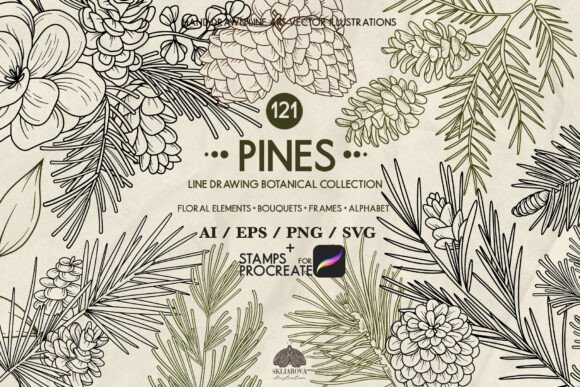
When I first opened the Pine Forest Line Drawing Collection, I didn't just see a bundle of graphics; I saw potential for a specific kind of cozy, rustic aesthetic that has been in high demand lately. As a designer who spends hours translating digital art into thread, my initial reaction was one of cautious optimism. The collection promises 121 illustrations ranging from pinecones and branches to letters, numbers, and decorative dividers. While the file formats like AI, SVG, PNG, and EPS are standard for modern workflows, the real test for any embroidery product lies in how these lines translate onto fabric. Does the line weight hold up under a needle? Do the negative spaces work with satin stitches? This review breaks down exactly where this design set fits in your studio and where it might cause headaches.
The Mood and Visual Personality
The Pine Forest Line Drawing Collection exudes a calm, woodland vibe that feels perfect for the current market trend toward nature-inspired decor. The line work is clean and precise, which is a massive plus for machine embroidery. Unlike heavy, blocky vector art that can look clunky when stitched, these drawings rely on delicate strokes that mimic hand-drawn sketches. This creates a finished product that feels artisanal rather than mass-produced. For an Etsy seller or boutique owner, this distinction is crucial. Customers often pay a premium for items that look like they were crafted by hand, even if they are made on a machine.
The inclusion of 37 pine letters and numbers adds a layer of versatility that many generic clipart sets lack. It allows for personalized gifts without needing to source separate fonts. The 55 stamp brushes for Procreate are a nice bonus for creating digital mockups, but as a reviewer focused on physical output, I am most interested in how those brush strokes translate to actual stitching. The 18 decor elements and dividers suggest that this collection is designed not just for standalone patches, but for layout-heavy projects like aprons, tea towels, and nursery wall hangings.
Real-World Application: A Custom Tote Bag Scenario
To truly evaluate the Pine Forest Line Drawing Collection, I imagine a real-life scenario: a client comes to you wanting a custom embroidered tote bag for a local coffee shop or a holiday gift for a teacher. They want something unique, perhaps featuring their initials surrounded by pine boughs. Here is how this design collection performs in that context.
If you use the pine letters combined with the branch stamps, the result is likely to be striking. The open nature of the line drawing means that the stitch density doesn't need to be overwhelming to create visual impact. On a canvas tote bag, which is a sturdy fabric, the running stitches and light fill stitches used in these designs would lay flat and crisp. The contrast between the thread color and the natural cotton background would highlight the fine details of the pine needles and cones. However, if you attempted this on a stretchy knit sweatshirt without proper stabilizer, the delicate lines might pucker, distorting the organic shapes of the forest elements.
This collection shines brightest on structured items. Think about a linen pillow cover or a kitchen towel. The 18 decor elements and dividers are ideal for framing text or separating sections on a large garment. Imagine a baby onesie with a single pinecone and the child's name in the pine font. The simplicity of the line drawing ensures that the embroidery remains soft against a baby's skin, avoiding the stiff, raised texture that sometimes comes with dense fill stitches. This makes the Pine Forest Line Drawing Collection a strong candidate for baby embroidery projects where comfort is a priority alongside aesthetics.
Where to Exercise Caution
While the design is versatile, no single set works perfectly for every application. There are specific scenarios where you must tread carefully with Pine Forest Line Drawing Collection. First, consider small hoop sizes. If you are trying to fit a complex arrangement of multiple pinecones and a full sentence of text into a 4x4 hoop, the details might get lost or crowded. The thin lines of the drawing could become indistinguishable if the stitch density is too low, or they might break apart if the density is too high.
Textured fabrics also present a challenge. Embroidery relies on the fabric surface being relatively smooth for the needle to penetrate cleanly. On a heavily textured boucle wool or a rough burlap, the fine lines of the pine branches may not register clearly. Similarly, dark fabrics require careful thread selection. If you choose a thread color that isn't sufficiently contrasting, the subtle line work will vanish into the background. Always test your thread colors against the fabric before committing to a bulk order of materials.
Another area to watch is curved surfaces like caps. While the design looks great on flat planes, the curvature of a baseball cap can distort the geometry of the lettering. The "pine" font might look slightly off-center or stretched depending on the hat's curve. For such applications, it is wise to check whether the design includes digitizing adjustments for curves or if you need to manually adjust the placement. Additionally, avoid using this design for products that require frequent industrial washing unless you are confident in the stability of the stitches. Delicate line drawings can fray over time if the edges aren't secured properly.
Impact on Product Value and Brand Consistency
Using a cohesive design set like Pine Forest Line Drawing Collection significantly boosts brand consistency. When you offer a range of products—say, a matching set of a tote bag, a patch, and a printed tag—all featuring the same pine motif, customers perceive your business as professional and curated. This visual recognition builds trust. In the world of handmade products, buyers are looking for a story, and a consistent theme helps tell that story effectively.
The clarity of the design directly affects customer satisfaction. A well-executed embroidery project with sharp lines and clean edges suggests quality craftsmanship. Conversely, a poorly digitized version of these graphics could lead to loose threads or misaligned letters, which damages your reputation. Because this collection includes both graphic files and stamp brushes, you have the flexibility to create printable mockups that accurately represent the final embroidery project. Showing a realistic preview of how the embroidery file will look on a sweatshirt or apron can reduce returns and increase buyer engagement.
Practical Designer Notes for Success
Before you start stitching, there are several technical steps you should take to ensure the Pine Forest Line Drawing Collection delivers the best results. First, always test the design on scrap fabric. This is non-negotiable. You need to verify that the stitch density is appropriate for the fabric weight and that the hoop size accommodates the design without cutting off important details.
Check the thread color contrast thoroughly. The success of a line drawing relies heavily on visibility, so ensure your chosen threads pop against the background material. Review the stitch types; while the collection provides the artwork, the actual satin stitch, fill stitch, and running stitch parameters depend on your digitizing software or service. If you are importing these as vector files, you may need to adjust the density settings yourself to prevent puckering.
Don't forget to inspect small details. Zoom in on the pine needles and the curves of the letters to ensure they won't break during stitching. Test the design in black and white mockups to see how the composition holds up without the distraction of color. Also, confirm the licensing terms. If you plan to sell finished items like custom apparel or embroidered patches, make sure the license allows for commercial use. Finally, ensure you are using the proper stabilizer for the fabric type, especially for stretchy materials or lightweight linens.
In conclusion, the Pine Forest Line Drawing Collection offers a fresh, organic aesthetic that fits seamlessly into the world of craft business and small shop products. It is particularly well-suited for holiday embroidery, personalized gifts, and boutique branding where a touch of nature is desired. By paying attention to fabric choice, stabilization, and testing, you can transform these simple line drawings into high-value, professional-looking finished products that your customers will love.